
 English
 中文简体
中文简体 Español
 عربى
عربى

What Is a Milk Biscuit? The Direct Answer A milk biscuit is a baked good made with milk — or milk-derived ingredients such as condensed milk, powdere...
READ MORE
 2026.09.09
 Industry News
If you search for "milk biscuits", you will find two very different answers. Home bakers mean a quick bread made with milk instead of buttermilk. Food buyers and retail procurement teams usually mean a soft, sweet snack biscuit with a milky flavor and consistent industrial quality. Both definitions are correct, but they point to different products with different production methods. As a professional biscuit manufacturer with four production lines and more than 10,000 tons of biscuits sold each year, we answer questions like these every week. This guide gives you the definition, the key differences from buttermilk biscuits, and the practical purchasing criteria.
A milk biscuit is a biscuit made with milk as the main liquid, or with milk powder as a defining ingredient in the formula. In home baking, that usually produces a soft, butter-leavened quick bread. In commercial baking, the term includes a whole family of products: soft and chewy biscuits, crisp milk-flavored cookies, and everything in between.
The common thread is a clean dairy taste and a sweetness level mild enough to eat with tea, coffee, or a glass of milk. Texture, however, varies widely. In Asian markets, a "milky biscuit" might be thin and crunchy; in European markets, milk biscuits tend to be softer and richer. Our complete guide to milk biscuits explains these global variations in more detail, and it helps buyers understand why a clear specification is more important than relying on a label.
For any buyer, this matters because the formula decides how the product behaves in transport, on the shelf, and at the moment of consumption. A soft milk biscuit needs a different packaging approach than a dry crispy version. That is why sellers should be ready to share precise moisture, fat, and sugar content before you place a purchase order.
The first and simplest answer is this: milk biscuits are softer, sweeter, and less tangy than buttermilk biscuits, and they rise a little less. The reason is chemistry. Buttermilk is acidic, so it activates baking soda and produces carbon dioxide quickly, giving the dough extra lift and a slightly sour flavor. Milk is neutral, so the dough relies mostly on baking powder, which creates a denser crumb with a cleaner dairy taste.
| Comparison Point | Milk Biscuits | Buttermilk Biscuits |
|---|---|---|
| Primary liquid | Whole milk or reconstituted milk | Cultured buttermilk |
| Flavor | Mild, slightly sweet | Tangy, more complex |
| Crumb texture | Tender and fine | Flaky with a higher rise |
| Leavening reaction | Baking powder driven | Baking soda plus acid |
| Best uses | Breakfast, tea time, kids' snacks | Dinner sides, shortcake, gravy |
For commercial producers, these differences affect the production line. Milk-based dough is easier to keep consistent in an automated environment because the neutral pH reduces variation in leavening. Buttermilk formulas demand tighter temperature control and shorter mixing windows. That is one practical reason why many large-scale biscuit plants prefer milk-based recipes when they make soft biscuits at high volume.
Buying milk biscuits for resale is not the same as picking a bag at the supermarket. You need to define four or five measurable points before contacting a supplier. Start with these:
A good purchasing decision starts with matching the product spec to the sales channel. Retailers serving impulse buyers should prefer smaller packs; wholesalers supplying lunchbox programs need consistent size and weight more than flashy packaging.
Most commercial milk biscuits fall into one of three flavor families. Knowing them helps you choose a line that fits your market.
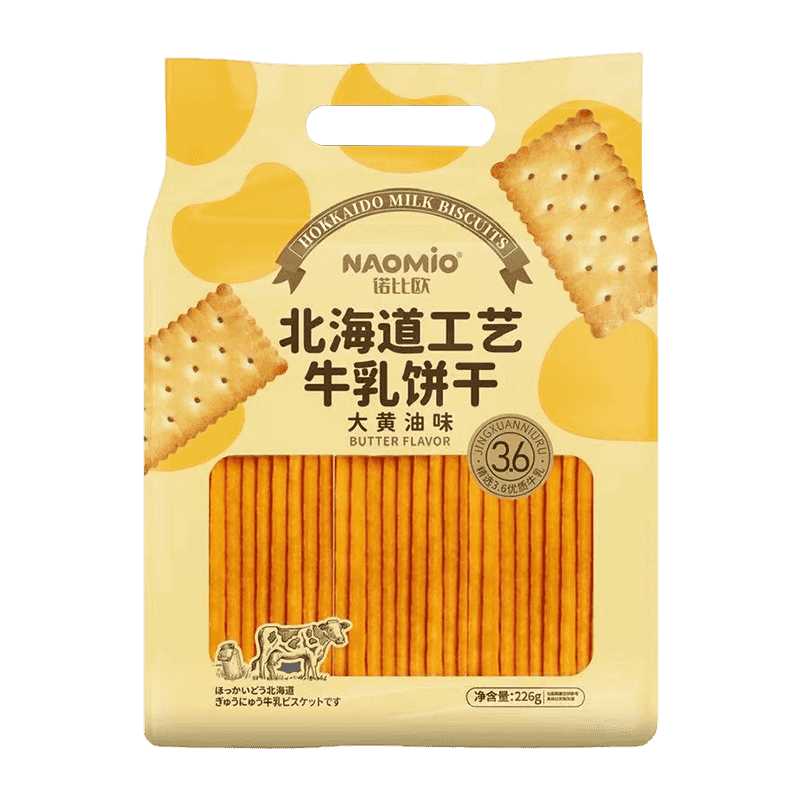
Butter-flavor milk biscuits highlight the dairy note of the dough. They are positioned as rich and creamy, and they pair well with coffee. In convenience stores, they are often sold individually wrapped as a treat with hot drinks.
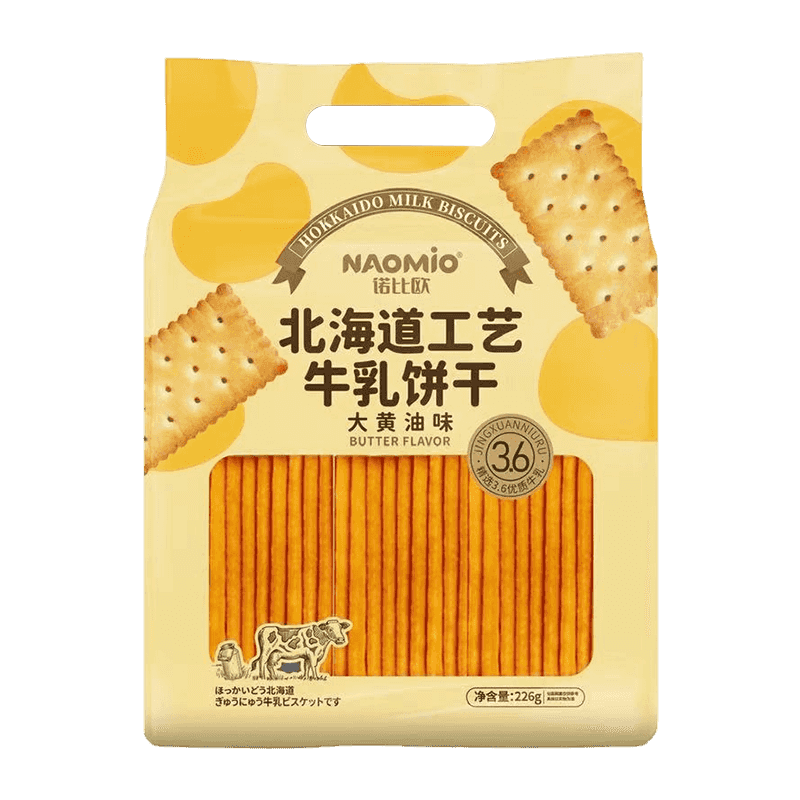 Butter Flavor Milk Biscuits with New Zealand Anchor ButterThis variant uses imported Anchor butter and at least 10% fresh milk, creating a rich, creamy taste that pairs well with coffee. It fits the butter-flavor segment described in the surrounding text.View Product →
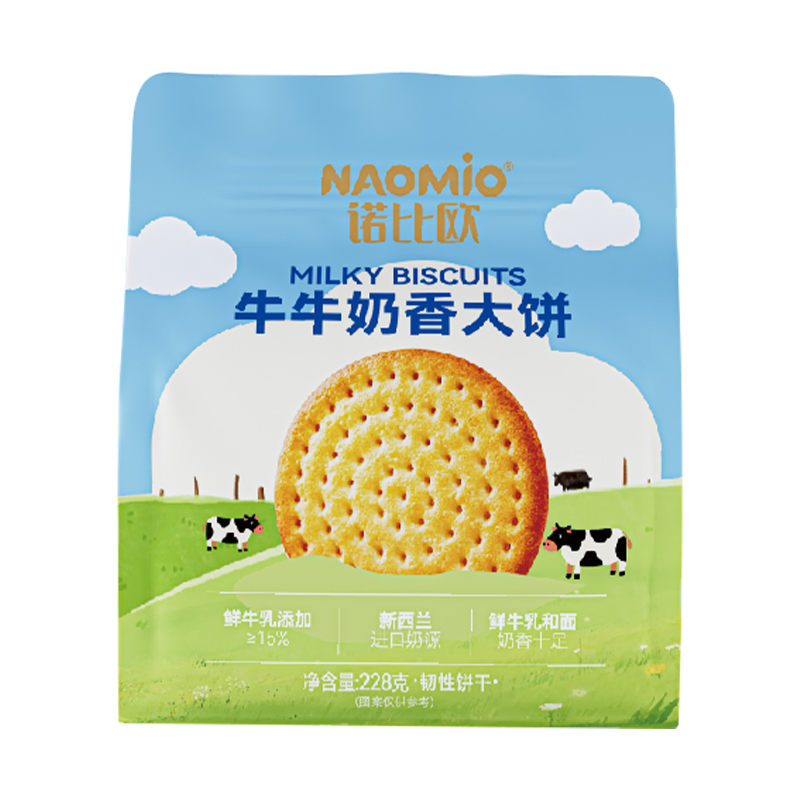
Milk-flavor milk biscuits are the classic expression of the category. The taste is clean, slightly sweet, and instantly recognizable. Retailers use them as a safe launch product because consumer acceptance is consistently high across age groups and regions.
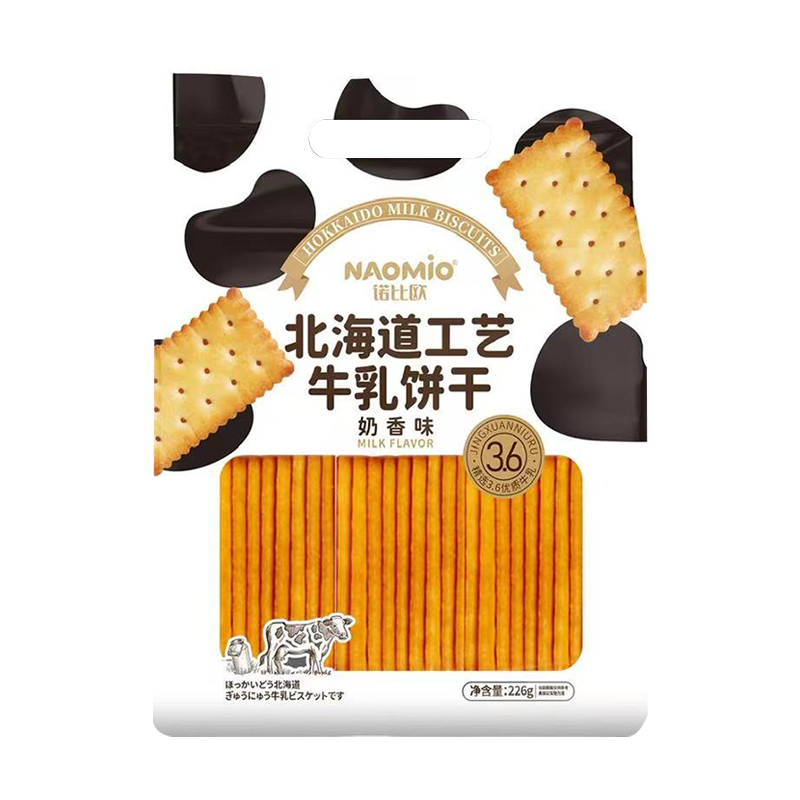 Classic Milk Flavor Milk Biscuits with 15% Fresh MilkThe classic milk biscuit option with at least 15% fresh milk and no added flavorings. It offers a clean, slightly sweet taste that retailers can use as a safe launch product for broad acceptance.View Product →
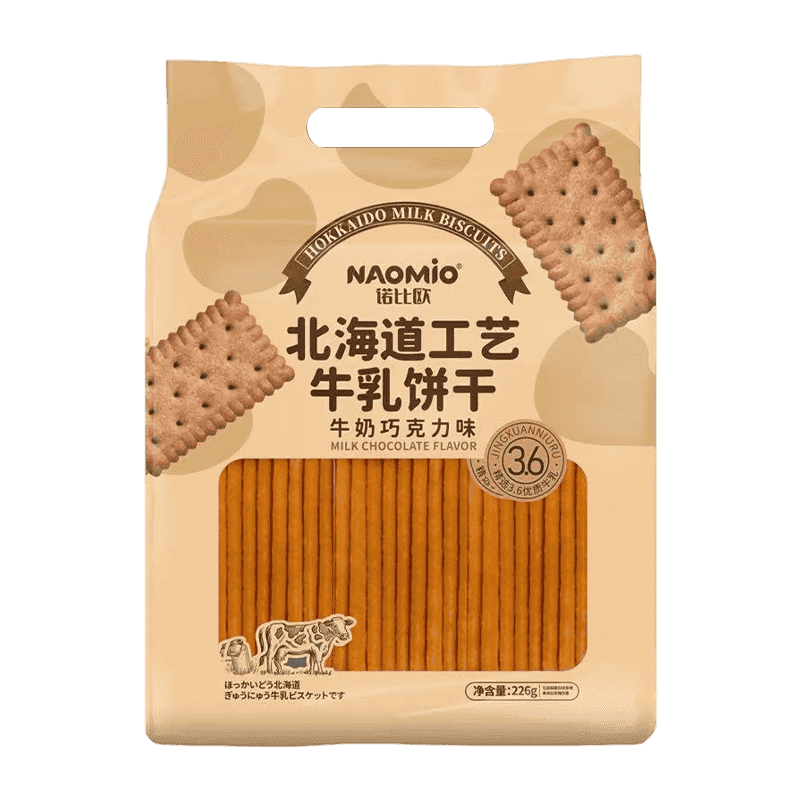
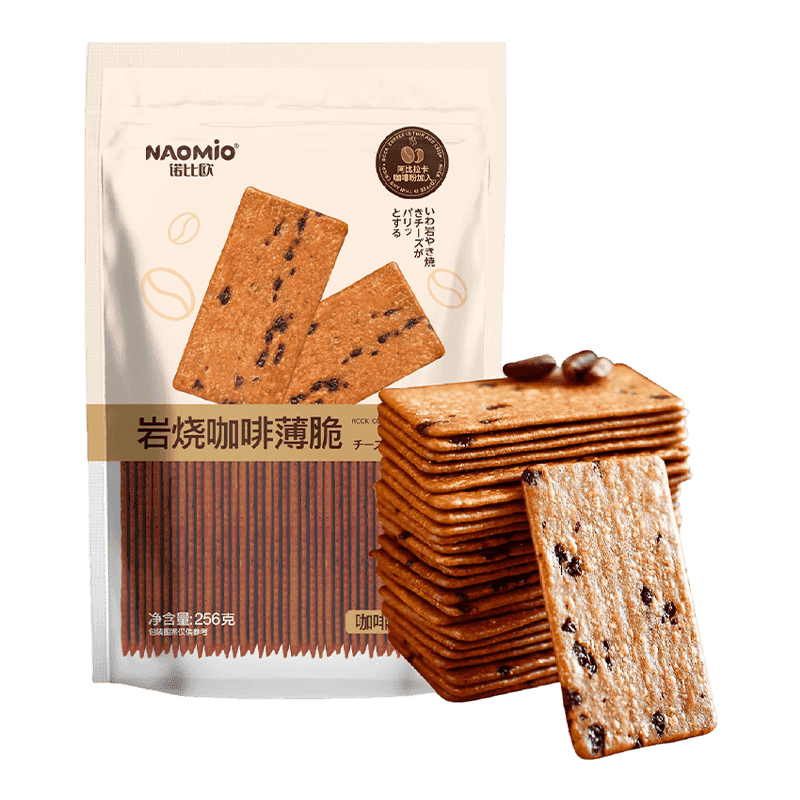
Milk-chocolate-flavor biscuits combine milk powder with cocoa for a smoother, less bitter chocolate taste. This variant targets the indulgence market and works well in larger sharing bags. Buyers with a dessert or bakery section often add this flavor to extend the range without adding new production complexity.
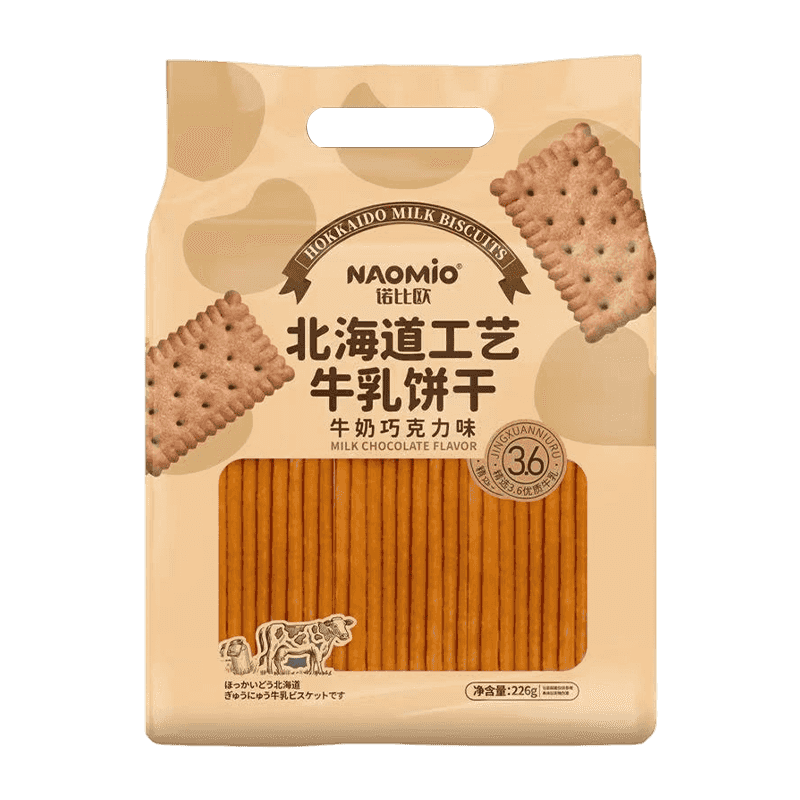 Milk Chocolate Flavor Biscuits with Cocoa Powder and LiquorA chocolate-infused twist that blends cocoa with milk to deliver a smoother, less bitter taste. Positioned as an indulgence item, it works well in sharing bags and extends a dessert or bakery range.View Product →
After you choose a flavor, the next decision is format. The channel determines the right unit size, packaging, and even the biscuit's thickness. The table below summarizes the combinations we see most often.
| Sales Channel | Recommended Format | Flavor Suggestion |
|---|---|---|
| Convenience stores | Individually wrapped pieces | Butter flavor |
| Grocery cookie aisle | Flow-pack bags | Milk flavor |
| Bakery and cake shops | Bulk boxes | Milk chocolate |
| Kids' lunch and snack programs | Small portion packs | Milk flavor |
These pairings are not strict rules, but they reflect the way consumers buy. An impulse buyer at a convenience store reaches for a single wrapped biscuit. A parent stocking a lunchbox looks for a pack that is easy to open and portioned correctly. Matching format to the channel reduces waste and improves the probability of repeat purchase.
Milk biscuits, especially soft ones, are sensitive to small changes in production conditions. Dough temperature, oven time, and the humidity in the packing hall all influence the final texture. A supplier with limited capacity is more likely to vary between batches when demand is high. That is why scale and control systems matter.
Scale alone is not enough, of course. The factory should monitor quality from raw material intake all the way to finished goods. A manufacturer with a dedicated in-house food safety laboratory can test moisture, texture, and microbiological indicators before a container is loaded. This kind of process control protects you from off-spec deliveries and costly consumer complaints.
At Ningbo Qibao Food, we run four biscuit production lines with annual sales above 10,000 tons, and our quality team monitors every stage from ingredient intake to packaging. You can review the full biscuit range on our company site to see how we organize categories such as yeast biscuits, soda crackers, and milk biscuits.
The term "milk biscuits" covers home recipes and industrial snack production, but the underlying demand is consistent: a soft, mildly sweet biscuit with a clear dairy taste. For a home baker, the recipe is enough. For a commercial buyer, the decision rests on measurable specifications: moisture, fat, sugar, packaging, and the supplier's ability to hold those numbers across thousands of tons. When the format matches the channel and the specification matches the consumer's expectation, milk biscuits become a reliable repeat-purchase product for retailers and a dependable revenue line for the supplier.
Content
What Is a Milk Biscuit? The Direct Answer A milk biscuit is a baked good made with milk — or milk-derived ingredients such as condensed milk, powdere...
READ MOREWhat Milk Biscuits Are — The Direct Answer Milk biscuits are baked goods made with milk or milk-derived ingredients — most commonly whole milk, skimm...
READ MOREWhat Are Yeast Biscuits and How Do They Differ from Conventional Crackers? Yeast biscuits are a category of baked cracker or biscuit in which live yea...
READ MORENutritional biscuits are baked products specifically formulated or fortified to deliver meaningful amounts of protein, fiber, vitamins, or minerals —...
READ MORE





No. 232 Xinxin Road, Xinxin Industrial Village, Langxia Street, Yuyao City, Zhejiang Province
+(86) 187-6812-9528
