
 English
 中文简体
 Español
 عربى


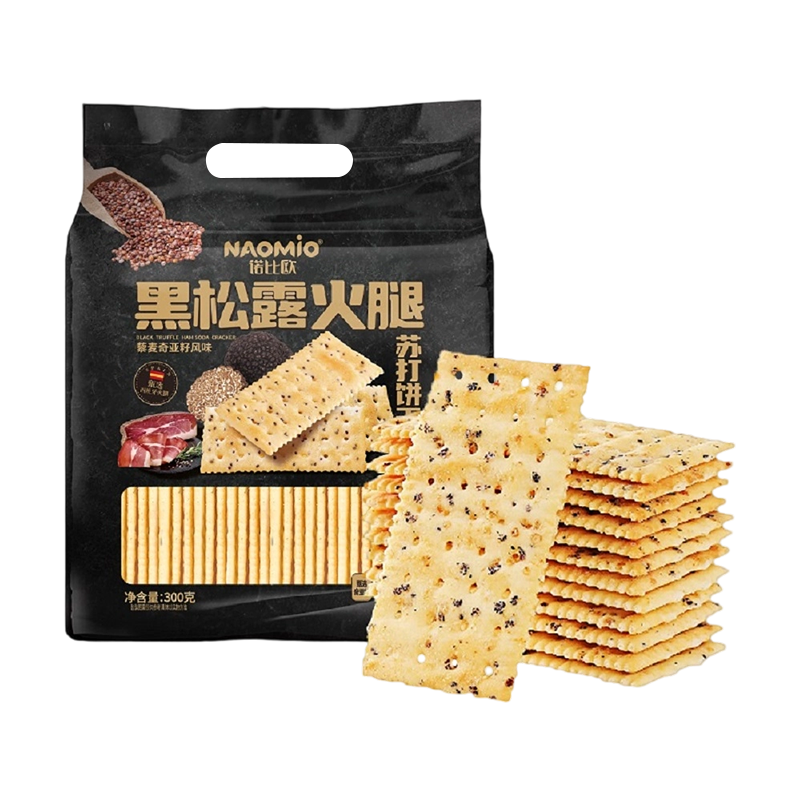
Peanut butter crackers are one of those snacks that seem simple until you start counting. A single cracker, a little sandwich pack, or a handful with...
READ MORE
 2026.11.25
 Industry News
Water crackers have a way of looking lighter than they are. They are thin, dry and neutral-tasting, so it is easy to assume they are almost carb-free. In reality, they are made mainly from wheat flour, and flour is a carbohydrate-rich ingredient. The useful question is not just “how many carbs in water crackers?” but “how many carbs in the water crackers I am actually eating?” Serving size, cracker weight and recipe all matter.
Most water crackers on the market give a serving size of about 4 to 6 crackers, weighing roughly 14 to 18 grams. A serving that size commonly contains about 10 to 15 grams of total carbohydrate. Because water crackers are low in fiber, their net carbohydrate figure is usually close to the total — often only 0.5 to 1 gram lower. Put another way, a single cracker often carries around 2.5 to 3.5 grams of carbohydrate, and 100 grams of water crackers typically contains about 70 to 80 grams of total carbohydrate. A serving also often provides around 60 to 90 calories and 1 to 2 grams of protein. Water crackers are not a low-carbohydrate food, but a small portion can still fit into a planned carb budget.
| Portion | Total carbs | Fiber | Net carbs | What it means |
|---|---|---|---|---|
| 1 cracker, about 3–4 g | 2.5–3.5 g | 0–0.3 g | 2.3–3.5 g | Small, but several crackers add up quickly. |
| 4 crackers, about 14–16 g | 10–12 g | 0.3–0.7 g | 9–12 g | A common label serving size. |
| 6 crackers, about 18–20 g | 13–16 g | 0.5–1 g | 12–15 g | A larger snack portion. |
| 100 g | 70–80 g | 2–4 g | 66–78 g | Useful for comparing different packages. |
Water crackers are simple by design: flour, water, salt, and sometimes a little oil or milk. The flour is the main source of carbohydrate, mostly in the form of starch. A thin, small cracker may weigh only 3 grams, while a thicker or larger cracker may weigh 5 grams or more. Two products that look similar can therefore deliver different carbohydrate totals per piece.
Recipe also matters. A plain water cracker may contain almost no added sugar, but a flavored version might include cheese, seeds, herbs, milk powder or a sweet coating. Seeds and whole grains can raise fiber slightly, while sugar-containing flavorings add carbohydrate. Moisture is another factor: a drier cracker concentrates the flour by weight, so 100 grams may contain more carbohydrate than a softer or oil-rich cracker. This is why the serving size on the label is more useful than the number of crackers alone.
On a nutrition panel, total carbohydrate includes starch, sugars and dietary fiber. For water crackers, most of that total is starch. The sugar number may be 0 grams even when the total carbohydrate is 10 grams or more, because starch is not listed as sugar. If you track net carbs, subtract dietary fiber from total carbohydrate. For plain water crackers the difference is usually small: a 10-gram carbohydrate serving with 0.5 grams of fiber gives about 9.5 grams of net carbohydrate. A seeded or whole-grain cracker may have a little more fiber, but the total carbohydrate can still be high.
Those three steps take only a moment, and they prevent a common mistake: assuming that a plain-tasting cracker is automatically low in carbohydrate. Plain does not mean carb-free. It usually means the ingredient list is short, with flour still doing most of the work.
A quick way to keep the numbers in perspective is to think in three levels. Per cracker, expect roughly 2.5 to 3.5 grams of carbohydrate. For a four-cracker snack, that is about 10 to 14 grams. For six crackers, it is closer to 13 to 16 grams. Per 100 grams, water crackers generally sit around 70 to 80 grams of carbohydrate, which is similar to many plain biscuits and crispbreads.
Per-100-gram figures are helpful when you compare packages, because they remove the effect of different cracker sizes. Per-cracker figures are more helpful when you are standing in the kitchen and deciding how many to put on a plate. If you use a food scale, weigh the crackers once and note the total. After that, you can estimate a portion without weighing every time.
Water crackers are often eaten with cheese, soup, dips or cold cuts, and the toppings can change the meal’s carbohydrate total as much as the crackers do. A few crackers with cheese and sliced cucumber is a different carb choice from a pile of crackers with a sweet dip. If you are counting carbohydrates, decide on the cracker portion first, then build the rest of the plate around protein, vegetables and healthy fats. This usually feels more satisfying than eating a large number of plain crackers on their own.
Lower-sugar crackers can be useful, but the label still matters. Sugar reduction does not automatically mean a large drop in total carbohydrate, because flour is still the main ingredient. For a closer look at how lower-sugar cracker claims work, see our guide to low-sugar soda crackers.
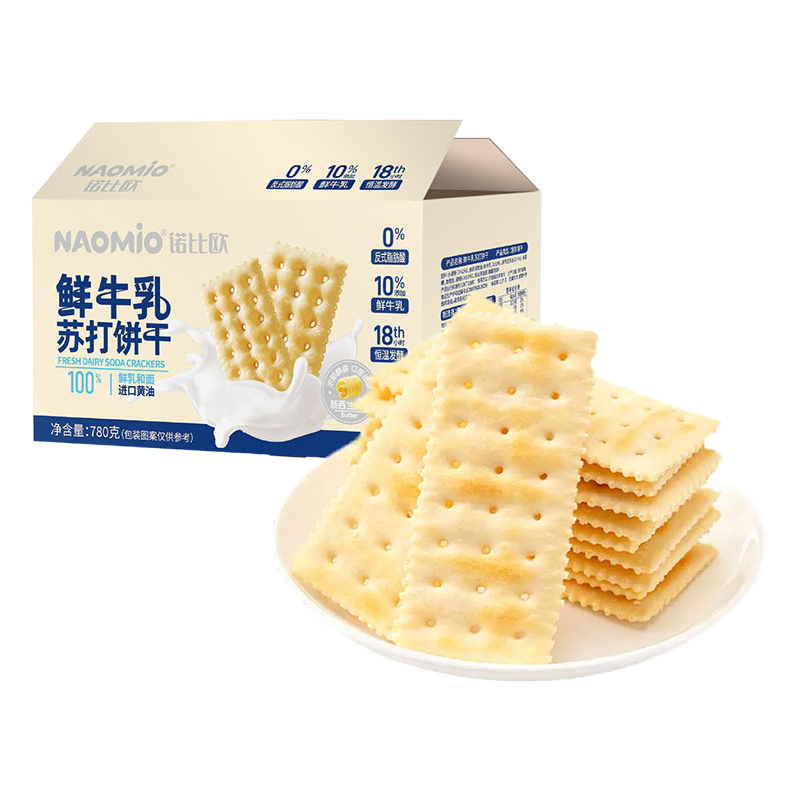
One lower-sugar option from our own range is our low-sugar milk soda crackers. As with any cracker, check the serving size and total carbohydrate on the pack rather than relying on the front-of-pack wording.
 Low-Sugar Milk Soda Crackers with Fresh Milk and ButterA lower-sugar cracker made with fresh milk and New Zealand butter, naturally fermented for 18 hours; check the pack for serving size and carbohydrate total.View Product →
At Ningbo Qibao Food, we have been making biscuits and crackers for years, and we still begin every carbohydrate conversation with the same step: look at the serving size. A plain cracker is simple, but the numbers on a label are only useful when you know what portion they describe. Whether you choose a classic water cracker or a lower-sugar soda cracker, the most reliable answer comes from the pack in your hand, not from a general rule. If you keep that habit, you can enjoy a few crackers without guessing what they do to your daily carb total.
Peanut butter crackers are one of those snacks that seem simple until you start counting. A single cracker, a little sandwich pack, or a handful with...
READ MOREAs a professional cracker manufacturer, we hear this question often: how many carbs are in soda crackers? The quick answer is that a standard serving...
READ MORECream crackers have a reputation problem. They are plain, dry, and eaten straight from the sleeve they can taste about as exciting as cardboard. Yet ...
READ MORECrackers are one of those snacks that vanish before you think to count them, and Town House crackers are no exception. They are thin, they are butter...
READ MORE





No. 232 Xinxin Road, Xinxin Industrial Village, Langxia Street, Yuyao City, Zhejiang Province
+(86) 187-6812-9528
