
 English
 中文简体
 Español
 عربى

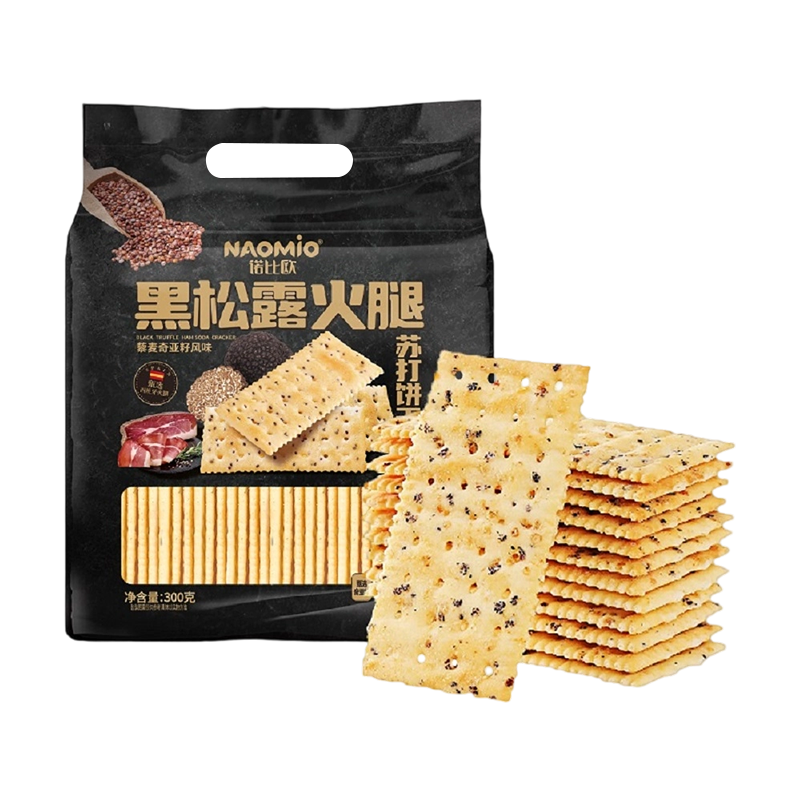
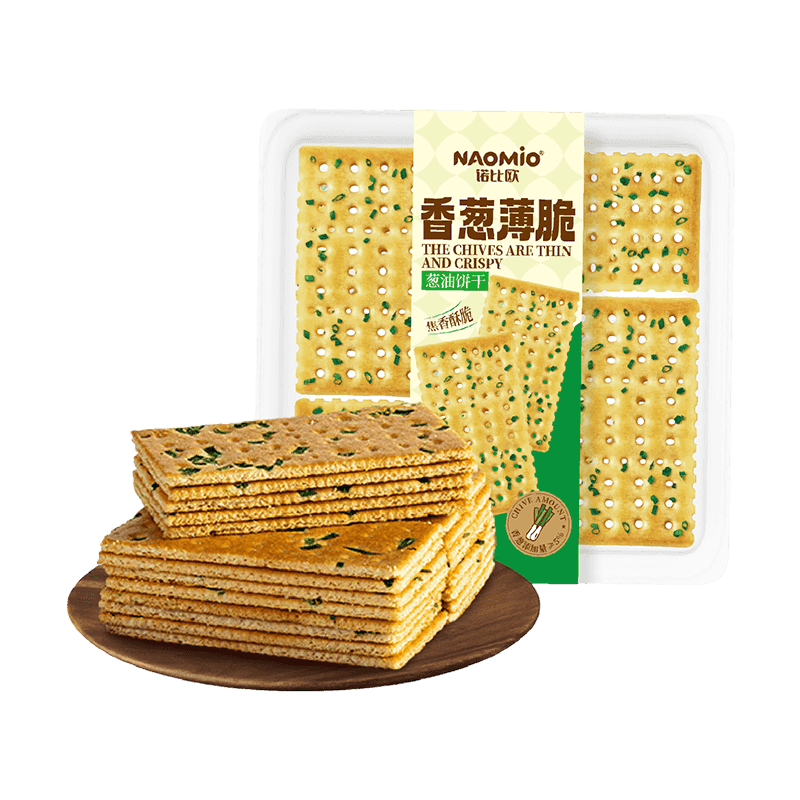
As a professional cracker manufacturer, we hear this question often: how many carbs are in soda crackers? The quick answer is that a standard serving...
READ MORE
 2026.10.22
 Industry News
Saltine crackers are an everyday staple that rarely gets a second glance, yet they're one of the most precisely engineered foods we produce. Every cracker in a fresh sleeve looks exactly like the one beside it—identical square edges, uniform docking holes, and a carefully trimmed silhouette—because consumers expect that consistency. So, how big is a saltine cracker? Most people have never actually stopped to measure one. The question is more interesting than it sounds: the size affects how they bake, how they're packaged, and even how they taste. Let's break it down, numbers and all.
A classic saltine cracker measures approximately 2 inches by 2 inches, or 5.08 centimeters on each side. The shape is intentionally square, which gives the cracker a familiar symmetry and allows it to break evenly along the perforation lines into neat quarters. That's a detail bakers rely on: the standard indentations running through the center are spaced so each quarter is nearly the same size.
As with any mass-produced food, exact measurements can vary slightly by manufacturer. You'll find crackers as small as 1.9 inches and as large as 2.1 inches on one side. The tiny difference is rarely noticeable in the package, but it affects baking time, packaging fit, and even the cracker's snap when you bite into it.
| Measurement | Inches | Centimeters |
|---|---|---|
| Side length | 2.0 | 5.08 |
| Diagonal length | 2.83 | 7.19 |
| Thickness | 0.06-0.08 | 0.15-0.20 |
| Surface area | 4.0 sq in | 25.8 sq cm |
Why exactly 2 inches? The dimension traces back to the early days of commercial cracker baking, when bakers found that a roughly 2-inch square baked evenly in the deck ovens of the late 19th century. That size also fit comfortably in the small tin boxes and paper sleeves used at the time. A cracker much larger tended to bake unevenly in the middle; one much smaller disappeared too easily beneath toppings. Over decades of refinement, the 2-by-2 square became the de facto standard across the industry.
Thickness is part of the size story, too. Most saltines are only about 1.5 to 2 millimeters thick. That slim profile is what gives the cracker its signature crisp bite—thicker dough would bake into a chewier texture, while thinner dough would crumble before it ever reached your soup bowl.
A standard saltine cracker weighs roughly 3 grams, though most commercial versions land in the 2.8 to 3.2 gram range. If you're counting calories or building a snack board, that number comes in handy.
For comparison, five saltines weigh approximately 15 grams—a portion size that shows up on nutrition labels across the industry.
| Specification | Typical Range |
|---|---|
| Single cracker weight | 2.8-3.2 grams |
| Calories per cracker | 12-14 kcal |
| Crackers per label serving | 5 crackers |
| Serving weight | 15-16 grams |
One factor that influences weight beyond geometry is moisture. Crackers are baked to a very low moisture content—usually below 3 percent—which keeps them crisp and gives them a longer shelf life. If a cracker absorbs even a little humidity from the air, its weight creeps up and its texture suffers. That's why packaging materials are designed to keep moisture out from the moment crackers leave the oven.
That modest weight is one reason saltines have earned a reputation as a light snack. You can munch through several crackers without the calorie load of a cookie or pastry, which is why they're a go-to for soup pairings, digestive-friendly snacking, and simple toppings.
Not every saltine-style cracker follows the 2-by-2 template. Different product lines deliberately shift dimensions to create a different eating experience.
From a production standpoint, those variations are more than a style choice. Different sizes require different sheeting rollers, cutter widths, and baking profiles. A small shift in dimensions can alter how long dough needs to bake and how many crackers fit on an oven band, which is why manufacturers like us maintain precise specifications for every SKU.
When you're baking crackers at commercial scale, size consistency isn't a cosmetic preference—it's a functional requirement. In our factory, four production lines turn out over 10,000 tons of biscuits and crackers every year, and every cracker has to match the spec sheet within tight tolerances. Here's why precision matters:
Size tolerances also come into play when crackers move along our lines. The dough is sheeted to a precise thickness, then cut into squares, docked, seasoned, and baked on a continuous oven band. If a cutter blade wears down and lets cracker width drift by a millimeter, it's not visible to the naked eye but can compound across a full batch.
We conduct continuous checks from raw dough to finished packaging to catch size drift early. The same diligence is standard at any serious cracker bakery, which is why the crackers you buy look and feel so uniform.
The humble saltine's dimensions also shape everyday decisions in the kitchen and on the store shelf.
The 2-by-2 square is large enough to hold a slice of cheese or a smear of peanut butter without feeling flimsy, yet small enough to float on top of a bowl of soup without instantly sinking. Mini versions are easier to scatter over salads or mix into snack bowls, while jumbo crackers conveniently become sturdy bases for hors d'oeuvres.
A classic sleeve typically holds about 16 crackers arranged in two neat stacks of eight. That count depends on thickness as much as width—slightly thicker crackers can reduce the stack to 15. As a result, producers carefully balance size and thickness against the package dimensions consumers have come to expect.
These may sound like trivial details, but they explain why a simple cracker can ship to grocery stores everywhere and arrive intact, neatly stacked in sleeves, ready to be piled onto a cheese board or crumbled into a soup.
So, how big is a saltine cracker? A standard saltine measures about 2 by 2 inches, weighs around 3 grams, and features a thin, crisp profile that stays remarkably consistent across brands. Those numbers may seem trivial at first, but they're the result of careful engineering—dough formulation, sheeting, docking, and temperature control all tuned to deliver the same square, satisfying bite time after time.
Next time you open a sleeve, take a closer look at one cracker before you bite in. That small square is exactly what it's supposed to be: a precisely baked piece of dough that more than a century of bakers have worked to perfect.
As a professional cracker manufacturer, we hear this question often: how many carbs are in soda crackers? The quick answer is that a standard serving...
READ MORECream crackers have a reputation problem. They are plain, dry, and eaten straight from the sleeve they can taste about as exciting as cardboard. Yet ...
READ MOREFew snacks are as quietly dependable as a saltine: square, thin, lightly blistered, dotted with tiny holes, and finished with a scatter of coarse sal...
READ MOREHow Many Calories Are in a Saltine Cracker? A single standard saltine cracker contains approximately 13 calories. Most people eat them in servings of...
READ MORE





No. 232 Xinxin Road, Xinxin Industrial Village, Langxia Street, Yuyao City, Zhejiang Province
+(86) 187-6812-9528
