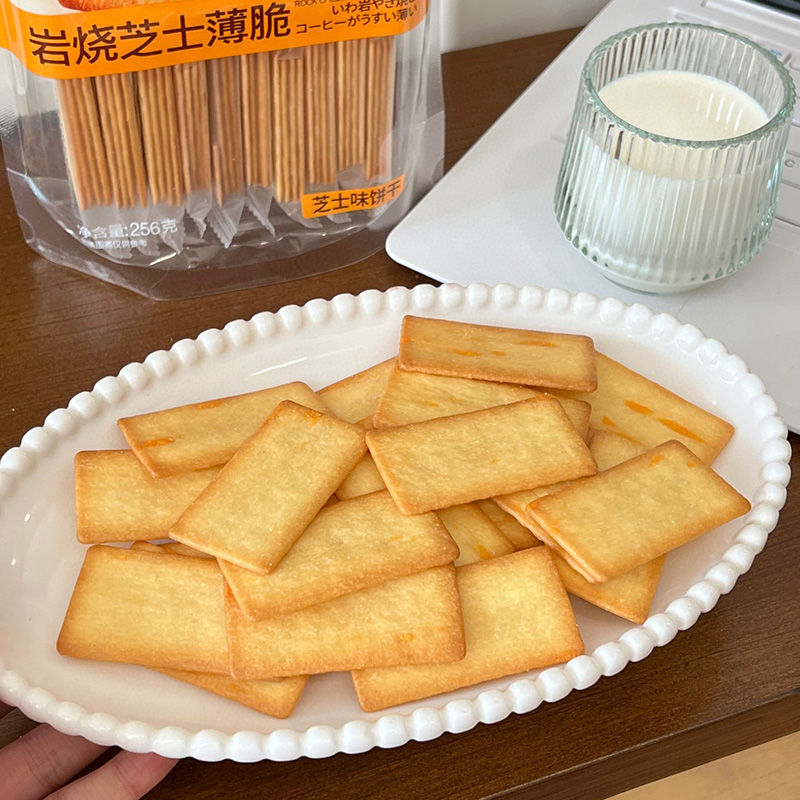
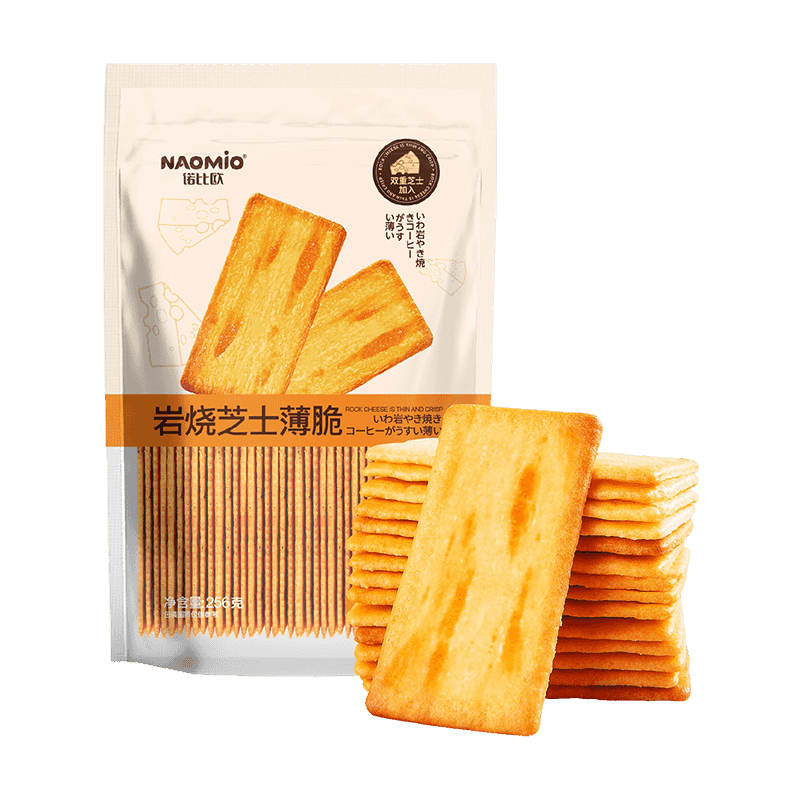
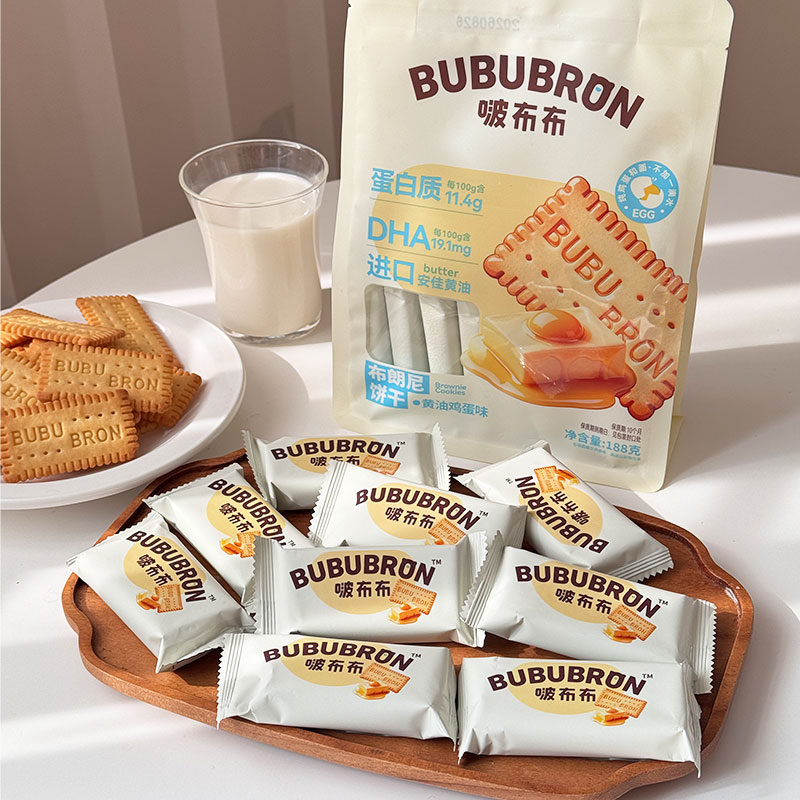
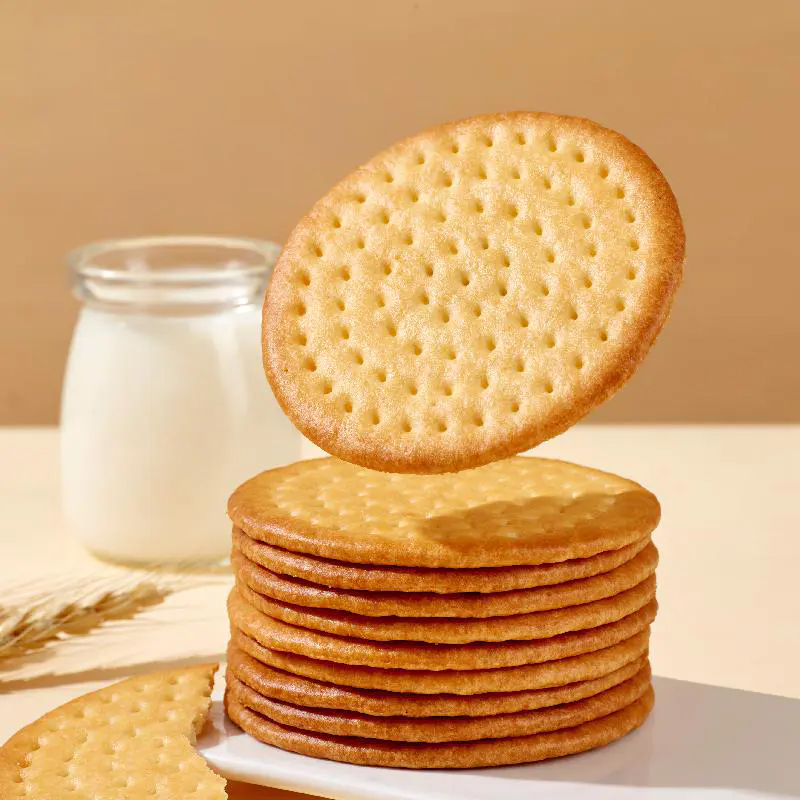
Cheese-flavored crackers: Manufacturing Process and Industrial Production Techniques
In the industrial manufacturing of
Cheese-flavored crackers, raw material handling and preparation establish the foundation for consistency, safety, and product performance. At Ningbo Qibao Food Co., Ltd., we implement structured procedures for receiving, inspecting, storing, and preparing all incoming materials, including wheat flour, cheese powder, fats, emulsifiers, leavening agents, salt, sugar, and seasoning compounds. Each batch undergoes systematic inspection protocols that evaluate moisture content, microbial limits, particle uniformity, and chemical stability before acceptance into production. These evaluations ensure that only compliant and stable materials enter our Cheese-flavored crackers production workflow. Storage conditions are carefully controlled with regard to temperature, humidity, and ventilation, as improper storage may lead to degradation of fats or clumping of dry ingredients, both of which affect dough behavior and final product texture. We organize warehouse zones according to material type, sensitivity, and turnover rate, applying a first-in-first-out inventory approach to maintain freshness and traceability. Cheese powder, a key flavor contributor in Cheese-flavored crackers, is handled with particular care due to its susceptibility to oxidation and moisture absorption. Sealed containers and desiccated environments are used to preserve aroma compounds. Flour is sieved prior to use to eliminate impurities and achieve uniform particle distribution, which improves hydration consistency during mixing. Oil and fat components are tempered to appropriate temperatures to ensure proper blending. At Ningbo Qibao Food Co., Ltd., we also prepare pre-mixed ingredient blends when necessary to streamline production and reduce variability. This includes combining dry ingredients into standardized batches that simplify dosing and improve accuracy during scaling. By maintaining strict discipline in raw material preparation, we establish a stable starting point for Cheese-flavored crackers production, minimizing deviations in texture, flavor intensity, and structural integrity throughout downstream processes.
Ingredient weighing and batching form a highly controlled phase in the production of Cheese-flavored crackers, where precision directly influences product uniformity and quality. At Ningbo Qibao Food Co., Ltd., we utilize calibrated electronic weighing systems integrated with digital control interfaces to ensure that each ingredient is measured within tight tolerance ranges. Each Cheese-flavored crackers formulation is developed through iterative trials and stored as standardized recipes within our production management system. These formulations define exact ratios of flour, cheese powder, water, oils, and functional additives, ensuring reproducibility across production cycles. During batching, ingredients are dispensed in a predefined sequence to optimize mixing efficiency and ingredient interaction. Dry components are typically introduced first, followed by liquids, which allows for even hydration and minimizes lump formation. Cheese powder distribution must be uniform to ensure consistent flavor throughout the Cheese-flavored crackers, and pre-blending techniques are often applied to achieve homogeneity before incorporation into the main mixing vessel. We implement verification steps after each weighing operation, comparing actual measured values against target specifications. Deviations are recorded and corrected immediately to maintain process integrity. Environmental factors such as humidity and temperature are monitored during batching to prevent moisture absorption in hygroscopic ingredients like flour and cheese powder. At Ningbo Qibao Food Co., Ltd., we also maintain traceability records linking each batch of Cheese-flavored crackers to its raw material sources, allowing for backward and forward tracking in case of quality investigations. Batch consistency is reinforced through the use of standardized work instructions and operator training programs, ensuring that personnel follow uniform procedures across all production lines. By controlling ingredient weighing and batching with precision, we establish the conditions necessary for consistent dough behavior, efficient mixing, and reliable final product characteristics.
Dough mixing represents a critical transformation stage in Cheese-flavored crackers production, where individual ingredients are combined into a cohesive and workable matrix. At Ningbo Qibao Food Co., Ltd., we employ industrial mixers designed to deliver controlled mechanical energy, ensuring uniform dispersion of ingredients while developing the appropriate dough rheology. The mixing process begins with the blending of dry ingredients, including flour and cheese powder, followed by gradual incorporation of liquids such as water and oil. The interaction between water and flour proteins initiates gluten formation, which contributes to the elasticity and extensibility required for shaping Cheese-flavored crackers. We carefully regulate mixing time and speed to balance gluten development; insufficient mixing results in weak structure, while excessive mixing produces overly tight dough that resists processing. Temperature control during mixing is maintained through jacketed mixing systems or pre-conditioned ingredients, as excessive heat can alter fat behavior and affect flavor compounds derived from cheese powder. Rheological properties such as viscosity, elasticity, and cohesiveness are monitored through empirical observation and instrumentation where available. These properties influence how the dough behaves during sheeting and cutting stages. At Ningbo Qibao Food Co., Ltd., we adjust hydration levels and mixing parameters based on flour characteristics, as variations in protein content and moisture absorption capacity can affect dough performance. The inclusion of emulsifiers supports the integration of fat and water phases, improving dough uniformity and stability. Cheese-flavored crackers dough must achieve a balance between plasticity and firmness, enabling it to pass through rolling equipment without tearing or sticking. By controlling mixing dynamics and rheological development, we create a dough system that supports efficient downstream processing and consistent final product texture.
After mixing, dough conditioning plays a significant role in stabilizing the physical and chemical properties of Cheese-flavored crackers dough prior to shaping. At Ningbo Qibao Food Co., Ltd., we allow the dough to rest under controlled environmental conditions to facilitate hydration equilibrium and gluten relaxation. During this phase, water molecules distribute evenly throughout the dough matrix, allowing starch and protein components to fully absorb moisture. This leads to improved dough extensibility and reduces resistance during sheeting operations. Gluten networks formed during mixing gradually relax, which prevents excessive shrinkage and deformation when the dough is rolled into thin sheets. Cheese-flavored crackers require uniform thickness and structural integrity, and proper conditioning contributes to achieving these attributes. We maintain controlled temperature and humidity levels during resting to prevent surface drying or microbial growth. Covered containers or enclosed chambers are used to preserve moisture within the dough mass. At Ningbo Qibao Food Co., Ltd., we define specific resting durations based on formulation characteristics and production requirements. Short resting periods may result in uneven moisture distribution, while excessively long resting may lead to fermentation or unwanted biochemical changes. Conditioning also allows fat components to redistribute within the dough, improving lubrication during mechanical processing. Cheese powder flavor compounds begin to integrate more uniformly throughout the dough matrix during this stage, contributing to consistent taste in finished Cheese-flavored crackers. By implementing controlled resting procedures, we ensure that the dough attains optimal workability, enabling smooth progression into sheeting, laminating, and shaping operations without compromising structural stability or product uniformity.
Sheeting and laminating processes define the physical architecture of Cheese-flavored crackers by controlling thickness, layering, and internal structure. At Ningbo Qibao Food Co., Ltd., we utilize precision rolling equipment capable of gradually reducing dough thickness through sequential passes between calibrated rollers. This controlled reduction ensures uniform density and minimizes internal stress within the dough sheet. Laminating techniques may be applied in certain Cheese-flavored crackers formulations to create layered structures that enhance flakiness and crispness after baking. This involves folding and re-rolling the dough multiple times, introducing air layers that expand during baking. We monitor thickness using measurement devices integrated into the production line to ensure consistency across the entire sheet. Variations in thickness can lead to uneven baking and inconsistent texture, so maintaining uniformity is a priority. The mechanical properties of the dough, including elasticity and extensibility developed during earlier stages, directly influence how the dough responds to sheeting forces. At Ningbo Qibao Food Co., Ltd., we adjust roller gaps, speed differentials, and feeding rates to match dough characteristics and achieve optimal results. Cheese-flavored crackers benefit from precise structure engineering, as controlled layering and thickness contribute to the final crispness and bite quality. Surface dusting with flour or starch may be applied to prevent sticking during sheeting. The laminated or sheeted dough is then prepared for cutting and forming, with careful handling to preserve structural uniformity. By managing sheeting and laminating processes effectively, we create a consistent base structure that supports uniform expansion and texture development during baking.
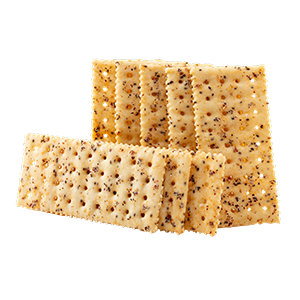
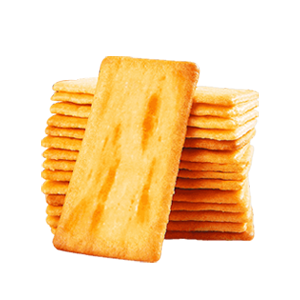
Cutting and forming operations define the final shape, size, and surface characteristics of Cheese-flavored crackers before baking. At Ningbo Qibao Food Co., Ltd., we employ rotary cutters, stamping dies, or customized molds to produce crackers with consistent dimensions and clean edges. Shape uniformity is important for ensuring even heat transfer during baking and consistent packaging specifications. Surface pattern engineering, including docking, perforation, or embossing, is applied to control gas expansion and improve visual appeal. Docking creates small holes in the dough surface that allow steam to escape during baking, preventing excessive puffing and maintaining a flat cracker profile. Cheese-flavored crackers often feature patterned surfaces that enhance texture perception and brand identity. We calibrate cutting tools regularly to maintain sharpness and precision, preventing deformation of dough edges that could affect product appearance. Scrap dough generated during cutting is collected and reprocessed under controlled conditions to optimize material utilization. At Ningbo Qibao Food Co., Ltd., we align forming operations with upstream dough characteristics to ensure compatibility between dough elasticity and cutting force. Excessive resistance during cutting may indicate insufficient conditioning, while overly soft dough may lead to distortion. Surface treatments, such as light oil application or seasoning pre-coating, may be incorporated prior to baking to enhance flavor adhesion. Cheese-flavored crackers rely on both structural consistency and surface aesthetics to achieve consumer acceptance, and precise forming techniques contribute to both functional performance and visual quality.

 English
 中文简体
中文简体 Español
 عربى
عربى